

Discussion on the joint development of the blue laser module by Furukawa Electric and NICHIA (Part 1)Crossing boundaries through dialogue centered on technology. An “all Japan” effort that led to becoming No. 1 in the world.

Within the accelerating shift to electric vehicles (EV), blue lasers are receiving increased focus as a breakthrough in copper processing. In this field, two of Japan’s top companies, Furukawa Electric and NICHIA, teamed up to jointly develop a new laser module. How did these companies with differing cultures and areas of expertise come together to achieve success in this extremely challenging project? Key members of the project team discussed the creative solutions to overcome technological challenges and how the unwavering trust between members was formed.
-
- Naoki Tsukiji
- Lead Researcher, Next Generation Photonics Business Innovation Project, Communications Solutions Division, Furukawa Electric Co., Ltd.
1989 Joined Furukawa Electric
2018-Early 2024 Promoted the activities for the joint development of a blue laser module as the responsible person of Furukawa Electric.
-
- Naoki Hayamizu
- Section Leader, Production Engineering Section, Industrial Laser Manufacturing Department, FITEL Products Division, Furukawa Electric Co., Ltd.
2000 Joined Furukawa Electric
Participated in the joint development of the blue laser module as Section Leader.
-

- Shinichi Nagahama
- Principal Research Scientist, LD Business Division, Optoelectronic Products Business Unit, NICHIA CORPORATION
1991 Joined NICHIA
From the start of joint development in 2017, he promoted development of the blue laser as NICHIA’s responsible person for technology development. Currently, he oversees all development from the same position.
-

- Masaki Omori
- General Manager, LD Advanced Application Development Department, KS Project Department, LD Business Division, Optoelectronic Products Business Unit, NICHIA CORPORATION
2003 Joined NICHIA
From the early stage of the project, he promoted development of laser processing technology. He is currently also involved in sales promotion.
Concerns about joint development into the unknown
——Please give an overview of your companies’ businesses and what led to the decision to conduct joint development.
Nagahama (NICHIA): NICHIA manufactures laser diodes, in other words semiconductor lasers. We first succeeded in developing a laser diode in 1995, and I was in charge of development at the time. Originally, our optical semiconductor business began from LED (light emitting diode), but our strong desire to “be involved in lasers” led to the successful new development. Initially, our laser diode was used as a recording laser for optical discs such as Blu-ray Disc, and thereafter, applications expanded to include the light source for projectors and laser headlights in automobiles. Today, our business is active in domains including optical discs, industrial applications, projectors and automobiles.
Optoelectronic Products Business Unit, NICHIA CORPORATION
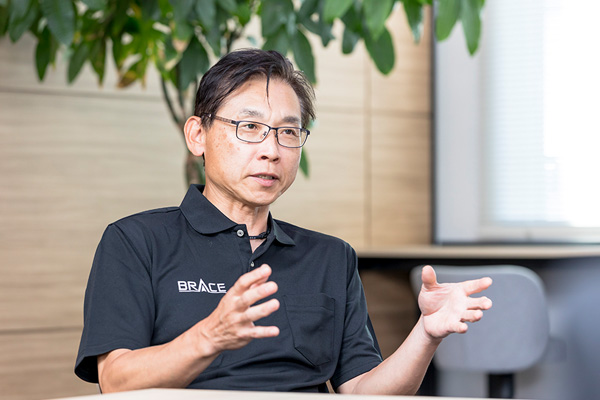
Tsukiji (Furukawa Electric): Furukawa Electric develops and manufactures optical fiber and the necessary components and devices for telecommunications systems that support telecommunications including smartphones. In the early 2000s, we started to expand our optical fiber technology beyond telecommunications. One example is fiber lasers used for material processing. The basic technology of fiber lasers is very similar to optical amplifiers used in optical communications, and it is an area in which we have great affinity. Development began in around 2003, and the business has developed in the domain of metal processing, such as cutting and welding steel.
Then, in around 2017, the major shift toward EV started to accelerate. EV are said to use about 4 times more copper compared to traditional internal combustion vehicles. However, we knew that given the wave characteristics of our existing fiber laser, it would be physically difficult to process copper. Following consideration of what type of laser would be suited to processing copper, we reached the conclusion that a blue laser would be extremely effective.
However, we did not possess semiconductor technology usable as the light source of a blue laser. This is an area in which NICHIA possesses excellent technology. On the other hand, we have accumulated peripheral technology over the years, such as the system to drive the laser diode and the optical fiber that conveys the light, and these are our strengths. We felt that by working together, we could create the best laser in the world.
Also, at the time, Japan had fallen behind other countries in the area of industrial lasers, and there was a strong desire to catch up and create the world’s best laser domestically as an “all Japan” team. Based on this, we decided NICHIA would be the best partner.
Communications Solutions Division, Furukawa Electric Co., Ltd.
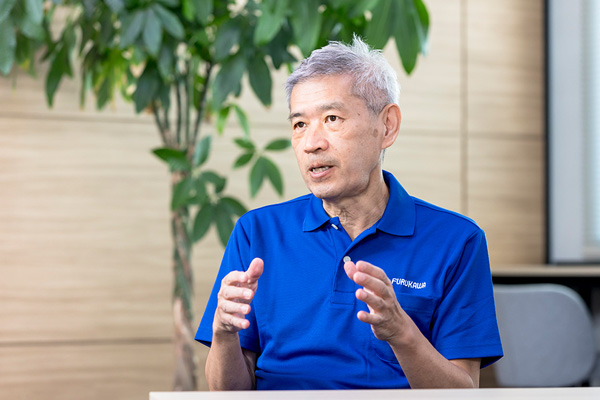
Hayamizu (Furukawa Electric): We possessed laser module technology at Furukawa Electric, but it was accumulated in the telecommunications domain for infra-red wavelengths, not blue light. By combining this laser module technology and NICHIA’s blue laser chip technology, we felt we could create a world-class blue laser module and using that laser module also create a laser product for processing copper.
As the first step, a representative from our Technology Planning Division approached NICHIA at an exhibition. The conversation was shared internally at NICHIA, and consideration began between the companies’ planning divisions. Once the discussions started to take shape, our Technology Division was included, and a project aimed at joint development was launched.
This project was handled as top secret by both companies. Development started with both companies unable to declare publicly that we were even working together. In addition, joint development involves the mutual disclosure of know-how accumulated by each party. Initially, we were both a little hesitant about how to proceed with discussions and to what extent we should cooperate with each other.
Industrial Laser Manufacturing Department, FITEL Products Division, Furukawa Electric Co., Ltd.
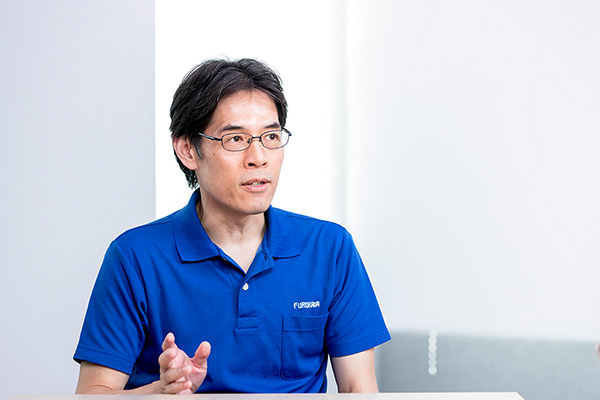
Nagahama (NICHIA): From our standpoint, Furukawa Electric was a veteran company in the area of semiconductor lasers. In particular, we knew they possessed extremely advanced technology in infra-red lasers for telecommunications. Given this, there were concerns if a new entrant such as us could work on the same technological level.
Up to then, NICHIA handled mainly products for consumers. However, the target of the joint development is an extremely specialized industrial product. For us, it was the first time to conduct full-scale joint development in a specialty domain. The companies also had different cultures, and it was unknown how the project should be carried out. In this sense, there were uncertainties.
Omori (NICHIA): Even sharing laser technology in common, our main focus was on consumer products and automobiles, while Furukawa Electric was focused on the telecommunications and industry domains. Two companies without any close ties were suddenly going to cooperate deeply with each other. I believe there was hesitancy in relation to the different cultures and way of conducting business. There was also concern about how we should participate in this different industry.
KS Project Department, LD Business Division, Optoelectronic Products Business Unit, NICHIA CORPORATION
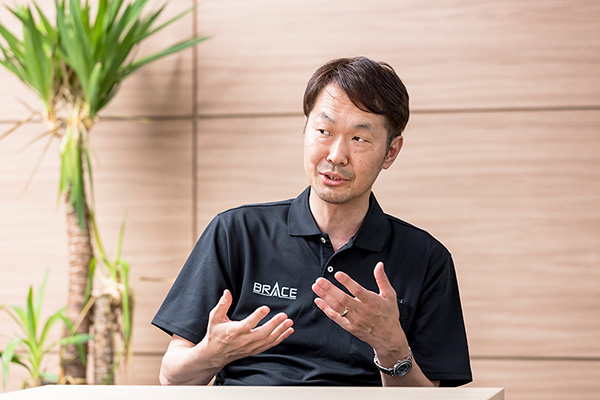
——Despite the concerns, what motivated you to work with Furukawa Electric?
Nagahama (NICHIA): Honestly, at the time, we were being approached by a number of companies due to the increased attention on blue lasers as an effective way to process copper following the shift to EV. There were talks with various manufacturers in Japan and overseas, but we felt we wanted to move forward as an “all Japan” team. Given this, when thinking about potential partners who have high technological capability and can aim to become No. 1 in the world with us, we reached the conclusion that Furukawa Electric would be the best partner.
When a representative from Furukawa Electric’s Technology Planning Division contacted our business planning officer, they were instantly on the same page, and their discussions were taken back to each company. This was the start of the partnership. Upon hearing about the discussions, I felt, “This sounds interesting. Let’s do it”. I believe Furukawa Electric also found the discussions to be “interesting”.
Omori (NICHIA): My initial feelings concerned whether it would actually be feasible as a business and whether we could create a good product. To achieve this, I thought technology would be the most important factor. From our standpoint, Furukawa Electric had long been a veteran company to us, as well as a technology-oriented company that focused on technology. I believe this was a major point when deciding to conduct joint development together with Furukawa Electric. The partnership began with a desire to create something good as companies that value technology. At the time, Japanese monozukuri (technology driven manufacturing) was struggling in the global market, and I strongly wanted to develop a good product that could turn the tables for Japanese monozukuri.
Hayamizu (Furukawa Electric): Initially, I was told about a “top secret project”, and upon hearing the details, it was a grand plan aimed at creating a blue laser module together with NICHIA. It was an extremely interesting plan, and I was included in the project given my experience in developing a semiconductor laser module used in fiber lasers.
In a semiconductor laser module, the light emitted from a semiconductor laser chip is concentrated using a lens, followed by coupling into optical fiber. The project began based on NICHIA manufacturing the semiconductor laser chip and us developing a module using that chip. NICHIA had very high technological requirements for the laser module, and I felt that if we could achieve those demands, it would also be possible for Furukawa Electric to increase our technology level.
Characteristics of “blue light” that impeded achieving the initial target
——What process was used when carrying out the joint development?
Omori (NICHIA): From the agreement conclusion stage, the roles of each company in the joint development were clearly defined. We were responsible for the semiconductor laser and package, and Furukawa Electric was responsible for completing the laser diode module based on the laser chip and package.
Nagahama (NICHIA): In addition to this, the objective of the module and target were also defined. When carrying out the joint development, rather than aiming to leap toward the goal, we focused on a step-by-step process. The targets to be achieved in the first year were set, and once those targets were achieved, we took the next step.
Hayamizu (Furukawa Electric): However, the first step actually did not go smoothly. It was extremely difficult to achieve the first target. Looking back, the targeted power at the time was certainly not very strong based on our current level, but it was still very challenging. Because we were handling a blue laser, which has different characteristics than the existing infra-red laser, it was necessary to revise a number of areas, including the optical design and thermal design. That was the first big wall. However, without giving up, we were able to overcome one issue at a time while holding multiple discussions.
——Specifically, what was discussed during those discussions?
Hayamizu (Furukawa Electric): We held regular meetings once a month. While revising the optical design and thermal design, we also received proposed improvements from NICHIA. Conversely, we would also make requests, such as, “when making the product, we want you to increase the laser chip mounting precision in the package to this level”. By holding extensive monthly discussions during which we would each stick our head in the technological domain of the other company, we slowly started to make the laser take shape. However, the limitations in terms of performance and cost also came into view.
Omori (NICHIA): In the initial division of responsibilities, NICHIA planned to assure the quality of the combined semiconductor laser and package. As our intention, in order to guarantee the quality of the laser, we had an absolute requirement that the “lens be installed outside the package”. However, when creating a module based on this configuration, it was not possible to achieve Furukawa Electric’s required performance, including module size and precision. Given this, it was necessary to “incorporate a special lens in the package”. This was essential to align with Furukawa Electric’s design concept, and it was a wall that could not be overcome through a strict division of responsibilities.
Specifically, it was necessary to install a tiny lens the size of a ballpoint pen tip at an unbelievable precision on the sub-micron level. By incorporating the lens in the package, ultimately, it was possible to increase the value of the product.
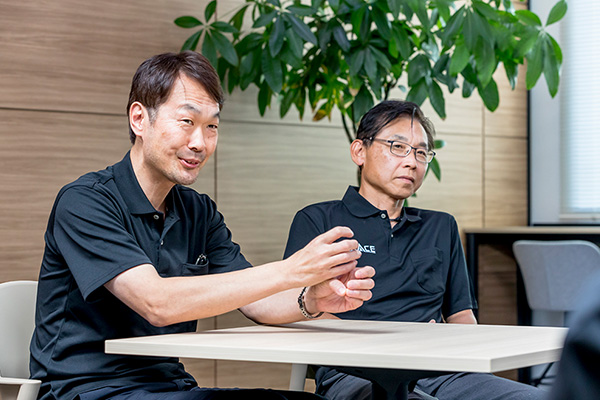
Hayamizu (Furukawa Electric): If the product was created without using the special lens, it would have been difficult to achieve a valuable product in terms of performance and cost. Given this, we requested NICHIA to install the lens inside the package. We knew that it was an extremely difficult request technologically, but NICHIA did an excellent job in successfully realizing this request. Moreover, they achieved it through a different approach than we had envisioned, and their extremely high technological expertise was truly surprising.
——As the number of technological interactions increased, it provided an opportunity to mutually recognize again the technological capabilities of each company, as well as led to deeper trust.
Omori (NICHIA): Designing a lens is normally within Furukawa Electric’s technical domain. However, because it would be incorporated into our package, we needed to have a thorough understanding. At first, there was some distance between our companies, but we were forced to bring our domains closer together. Without a thorough understanding, we would not be able to incorporate the lens in the package, and we also had to conduct in-house simulations to determine what we had to do in order to make a product Furukawa Electric would find acceptable. In this way, each company’s technology started to mix together.
Tsukiji (Furukawa Electric): In order to optimize the coupling with the lens, although it was slightly presumptuous on our part, we made proposals such as slightly changing the structure of the laser chip. NICHIA listened sincerely to these proposals, and by holding discussions, the lines between the companies gradually disappeared. I believe that without becoming so deeply involved, it would have been impossible to realize such outstanding power.
Omori (NICHIA): I still remember very clearly an event that occurred at Furukawa Electric’s laboratory in Yokohama. It was a small gathering, and rather than mutually disclosing the detailed design drawings, we shared our thoughts about the specifications for the boundary area. There was no definite answer given, but each company’s thoughts about “this is how it should be for this part” matched perfectly as if they had been indicated in advance. In this instance, both companies “just knew” we had mutual understanding.
Our outlooks did not perfectly match from the start. When we came together and gave the same answer from our different standpoints, I was certain our design concept was correct. Because we are separate companies, it was necessary to conduct confirmations in this way.
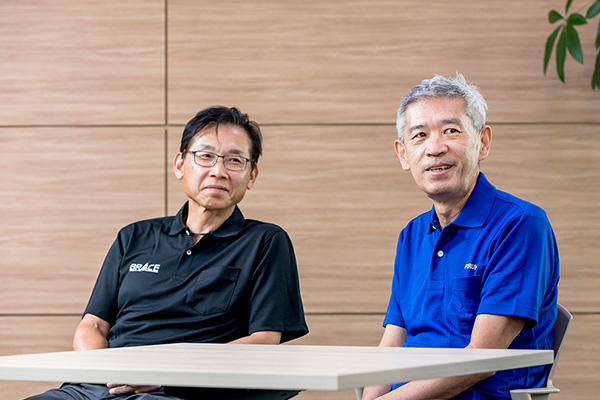
——That meeting was truly an example of engineers talking through “technology”. I believe that is how the teams gradually came together.
Nagahama (NICHIA): That’s right. Unlike what often happens during joint development, nobody brushed anybody off saying, “That’s your job”. We frankly shared opinions about what needed to be done in order to create something even better, improve the performance, and launch as a product. I believe this is how a true trust was formed.
Omori (NICHIA): As a result, we were able to achieve the first target of 100W. I feel this marked the real start of the project. Thereafter, we ultimately created a product with a 150W output.
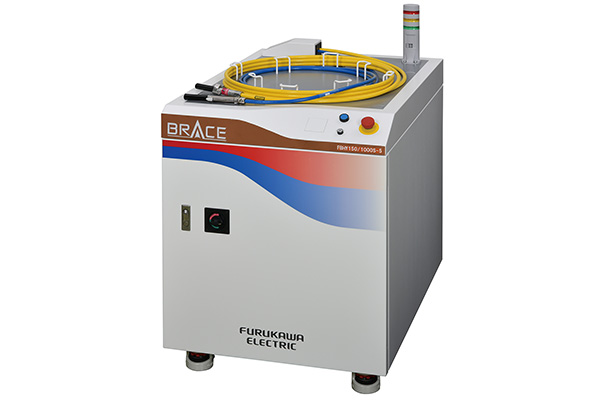
Tsukiji (Furukawa Electric): In addition, while reporting the developments on a working level to executive management, the presidents of both companies also formed a very close relationship. This also played a role in the ultimate decision to jointly establish a plant in Tokushima.
Nagahama (NICHIA): I feel we were oriented in the same direction at every level, including executive management. In particular, the engineers had very good relations, and we truly respect the engineers at Furukawa Electric. This development style went beyond empty theoretical discussions. We obtained actual data and advanced discussion based on that data.
We shared an outlook that placed priority on technology and a sincere attitude toward the data. Not forcing personal opinions on each other and seeking to find the optimum solution based on facts were reasons why we were able to be on the same wavelength, and I believe this led to strong trust between the project members.
Tsukiji (Furukawa Electric): Both companies place importance on experiments and value data. We are both very similar in this aspect.
Nagahama (NICHIA): Prior to this project, I had been involved in a number of joint developments, but this project with Furukawa Electric was the first time development was carried out with such a focus on the data. Actually, creating something and then evaluating it brings many issues to light. Then, the companies came together to think about solutions to those issues. I believe this process deepened the trust and became a driving force in realizing a better product.
Omori (NICHIA): I believe it was because both companies have different strengths. We each took responsibility for our respective areas of expertise and were able to carry out development simultaneously. For the gray zones between those areas, we reached agreement through close discussions. I believe this framework made the rapid development possible.
——What led to transferring manufacturing to Tokushima?
Tsukiji (Furukawa Electric): Once the joint development successfully reached a certain level, it was possible to start shipping products. Initially, the laser module was manufactured on Furukawa Electric’s pilot line in Chiba, but when thinking about full-scale mass production and future product developments, the facilities there were not sufficient.
Given this, consideration began regarding where to construct a new plant. While considering various possibilities, NICHIA proposed, “How about trying manufacturing in Tokushima?” This required a major decision because it involved disclosing Furukawa Electric’s laser module manufacturing technology to the relevant people in NICHIA and establishing a production line in Tokushima. The members of the manufacturing workplace had pride in their accumulated technology and did not initially accept the proposal, but following discussions, due in part to the trust established with NICHIA, a management decision was ultimately made to transfer manufacturing to Tokushima.
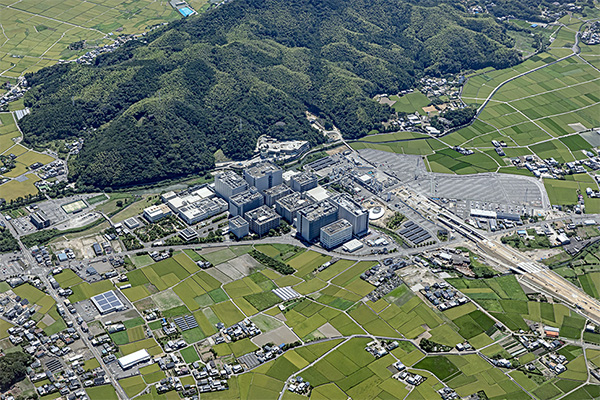
Hayamizu (Furukawa Electric): When transferring manufacturing to Tokushima, members from Furukawa Electric’s Development Division and NICHIA’s Manufacturing Division also joined the project. Very close communication was maintained at both the managerial and operational levels, and during this time, the personal relationships naturally deepened.
Nagahama (NICHIA): When establishing the production line, we installed the equipment used by Furukawa Electric unaltered in Tokushima and operated it together. During this process, receiving the license to use various technology left a very strong impression on me.
This laser module was unlike any product NICHIA had made in the past. Everything was new, and I learned the technology with a very fresh feeling. A particularly memorable part was the assembly process. NICHIA generally established production lines based on automation, so it was a new discovery for me to see how precise something could be made by human hand.
Hayamizu (Furukawa Electric): Honestly speaking, the manufacturing process was not completely finalized at that time. There were many parts that were still under investigation. This process was brought into NICHIA’s HQ plant (Tokushima), and we established the manufacturing process together.
In manufacturing, it is necessary to decide extremely detailed rules one at a time, such as “with this method, it is necessary to achieve at least this standard”. I spent 2 years working at NICHIA’s HQ plant, and for the details that had not yet been decided, I created them together with the members from NICHIA through close discussion. During this time, I truly felt NICHIA’s extremely sincere attitude toward manufacturing, and I believe they fully understood Furukawa Electric’s desire and technology.
Related news release
- Furukawa Electric and Nichia Form a Business Alliance in Core Technology (Laser Processing) Supporting the Production of Mobility Electrification (April 26, 2021)

- Development of a 5kW blue laser that produces the world's highest-level brightness from optical fiber (June 4, 2024)
- Opened a laser processing solution laboratory in Kariya City, Aichi Prefecture (November 27, 2024)
- NICHIA CORPORATION website (external link)
 Share
Share Tweet
Tweet Share
Share