

Development of the miracle material "Cu-Al-Mn alloy" through industry-academia collaboration for innovation in earthquake resistance

Making buildings in earthquake-prone Japan more robust. The super elastic Cu-Al-Mn (copper-aluminum-manganese) alloy has excellent machinability, low temperature dependence and the ability to regain its original shape even after major deformation. Directed toward enabling continued use or rapid restoration of buildings even after major deformation following a large earthquake, research into applications for steel reinforced concrete bridge piers and reinforcement for wooden framed houses was selected in 2021 as an A-STEP Project of Japan Science and Technology Agency (JST), and the project is now complete.
This article includes interviews conducted with the members who took part in the joint research project. Along with an overview of the project and the issues that had to be overcome, the project members discuss how this technology will protect buildings from large earthquakes that may occur in the future.
- *
The interview with Professor Omori of Tohoku University was conducted in writing at a later date due to circumstances, and the article was edited accordingly.
-
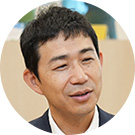
- Toshihiro Omori
- Professor, Department of Metallurgy, Graduate School of Engineering, Tohoku University
Main person involved in developing Cu-Al-Mn alloy with excellent machinability and shape memory. He announced these characteristics in a paper published in a famous journal and has become the focus of increased attention.
-
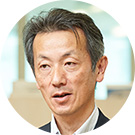
- Yoshikazu Araki
- Professor, Laboratory of Structural Engineering of Buildings, Division of Architecture and Architectural Engineering, Graduate School of Engineering, Kyoto University
Expert in applied research for architecture and building materials. In this project, he was in charge of research into increasing the earthquake resistance of buildings.
-
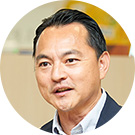
- Shuichi Fujikura
- Professor, Department of Civil Engineering and Regional Design, School of Regional Design, Utsunomiya University
Specializes in structures and earthquake engineering within the civil engineering field. In this project, he was in charge of expanding use of Cu-Al-Mn alloy to the civil engineering field, and he has mainly been conducting research into applications for bridge piers and earthquake resistance technology.
-
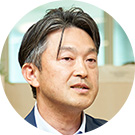
- Yosuke Urakawa
- Technology Department, Oriental Shiraishi Corporation
Team leader and PhD in engineering
Together with Professor Fujikura, he was in charge of considerations including installation for increased earthquake resistance of bridge piers and conformance with the various current standards.
-
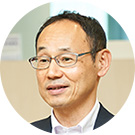
- Sumio Kise
- R&D Department, Furukawa Techno Material Co., Ltd.
General Manager and PhD in engineering
From his first year as an employee, he has been involved in work related to shape memory alloys. As the project leader, he oversaw the overall research into the material and its applications.
History of super elastic Cu-Al-Mn alloy development, and the major hurdle of large-scale single crystallization
——To begin, can you explain the history of Cu-Al-Mn alloy development?
Omori (Tohoku University): In the early 1990s, Kiyohito Ishida (presently honorary professor) and Ryosuke Kainuma (presently honorable professor) of Tohoku University started research into shape memory alloys based on phase diagram research, and they realized a revolutionary material with good machinability. Then, from the late 1990s, Yuji Suto, who is currently a professor at Tohoku University, joined the research as a graduate school student and doctoral research fellow, and they further improved the characteristics of shape memory alloys. I joined the research project from this phase.
Utilizing the alloy's excellent "ability to be formed into thin plates", we started developing applications for ingrown toenail correction strips from around 2005. The following year, joint research into Cu-Al-Mn alloy between Furukawa Techno Material and Tohoku University began at full scale, and the development of ingrown toenail correction strips was worked on as part of that research. Thereafter, through valuable joint research with Dr. Kitazumi of the orthopedic surgery department and Dr. Nobuko Tabata of the dermatology department at Sendai Red Cross Hospital, the alloy was successfully launched as the Dr. Scholl's brand in 2011.
At the same time, joint research also began with Yoshikazu Araki of Kyoto University from around 2006. Through Furukawa Techno Material's participation in this research, we started to seriously think about applying this material for buildings.
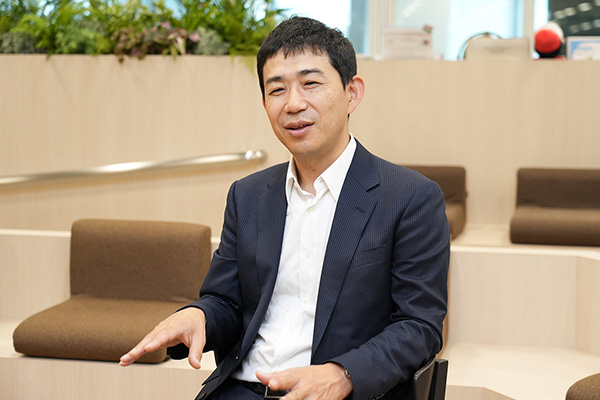
Araki (Kyoto University): I was residing in the United States in the late 1990s, and at the time, research was starting to be conducted there into the use of Ni-Ti alloy for earthquake resistance. However, Ni-Ti alloy had major issues in terms of cost. Around this time, I returned to Japan and read an article about the development of an outstanding new alloy by Tohoku University. After reading this article, I thought that a material with such characteristics could also be used in the architecture and civil engineering fields, and I quickly reached out to Tohoku University.
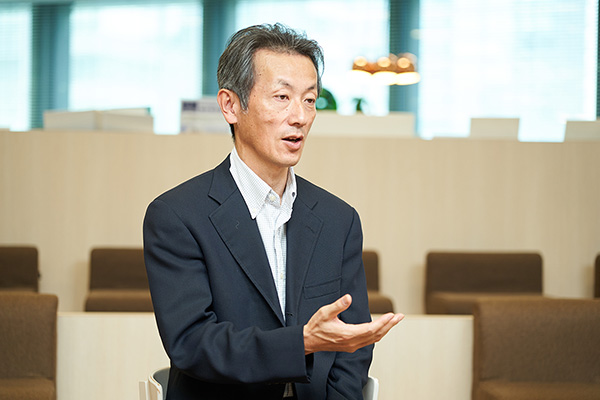
Omori (Tohoku University): Despite Professor Araki's visit, we were seriously struggling at the time to use the material for large components.
Opportunity came in around 2010. I observed a shaking table test using Cu-Al-Mn alloy for part of the brace conducted by Professor Araki at the Kyoto University Disaster Prevention Research Institute on the Uji Campus. However, the Cu-Al-Mn alloy fractured under heavy shaking during the experiment. We reached the conclusion that in order to solve this fracturing problem, it was necessary for the material to be "single crystal". However, making long rods of the type used in architecture single crystal was impossible based on conventional wisdom, and for a while, we lost hope.
In order to overcome this situation, the only way was to improve the "grain growth method" used by Professor Suto in the university laboratory to make small test samples for use in making large pieces. I went out on a limb and consulted with Furukawa Techno Material, and we attempted heat treatment. Surprisingly, huge grain formed. Right around this time we achieved these revolutionary results, Furukawa Techno Material's Sumio Kise joined the project team.
Kise (Furukawa Techno Material): The project was originally based on the talks between Professor Araki and the professors at Tohoku University. Furukawa Techno Material is said to be one of the oldest Japanese manufacturers and sellers of shape memory alloys. For this reason, our Sales Division general manager (at the time) visited the Tohoku University professors to request joint use of this new material, leading to my joining the project.
At the time, talks involved the commercialization of thin plate products made from Cu-Al-Mn alloy. However, it was decided to work at the same time to make an earthquake resistant structure leveraging the strength in "making large diameter rods" that is one of the characteristics of the new material. From this time, strong collaboration began between Professor Araki of Kyoto University, Professor Kainuma and Professor Omori of Tohoku University and Furukawa Techno Material.
The first stage of this collaboration involved the realization of practical use for residential houses. Following the successful completion of this goal, Professor Araki remained on the team and was deeply involved in the development of earthquake reinforcement products. Although the shape for residential houses gradually took form, as Professor Omori stated, single crystallization was a major hurdle during development. Normally, in metals, a "grain boundary" exists between crystals, and these boundaries increase the likelihood of fracturing. In order to secure safety as a building, it was necessary to make the entire material a single crystal.
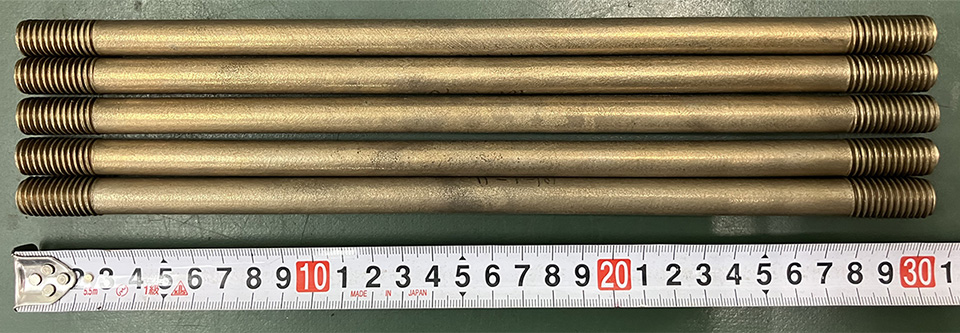
Without solving this large issue, we persistently advanced the research for use in architecture. Tohoku University developed the revolutionary basic technology for creating a single crystal through heat treatment alone, but it was only for laboratory samples several centimeters in size. The new technology I developed enabled us to successfully increase the size to around 30cm, which is the size that can actually be used in structures. This successful enlargement led to the practical use in houses and other structures.
Although the development is attributed to me, of course, it is based on the heat treatment recipe discovered by Professor Omori of Tohoku University. I feel that I just updated the recipe for actual manufacturing in the workplace and practical use.
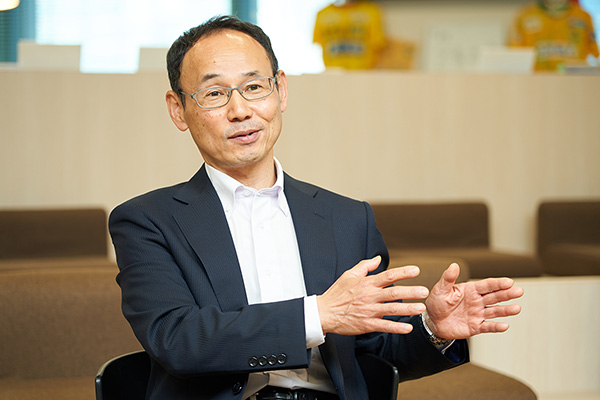
Omori (Tohoku University): Thanks to the excellent technology developed by Dr. Kise, we subsequently succeeded in making single crystal bars measuring 70cm in length. The results of this research were published in 2017 in the prestigious academic journal Nature Communications and generated a large response. The publishing of this paper opened the door to realizing practical use for large structures.
Assembly of a multi-disciplinary team, and the value of conducting basic research together with private companies
——What events led to the formation of the current project team?
Kise (Furukawa Techno Material): Creating single crystal material became relatively stable from around 2018. Around this time, Professor Fujikura of Utsunomiya University, who had just returned from the United States, approached Professor Omori about the potential use of this super elastic alloy for civil engineering structures. Professor Araki and I joined the discussions, and we held a meeting to exchange opinions, during which everyone in attendance reached a common agreement.
We decided to pursue the use of Cu-Al-Mn alloy for civil engineering applications and initially set the target of being selected for Japan Science and Technology Agency (JST) "A-STEP (support program for optimum application of research results)", and we started to jointly make preparations. In addition, Professor Fujikura introduced us to Dr. Urakawa of the specialist bridge builder Oriental Shiraishi, who subsequently joined the team.
Fujikura (Utsunomiya University): From around 2016, I was researching the leaning of bridge piers that occurs after a large earthquake. Bridges that develop a major lean during an earthquake are difficult to restore to use thereafter technologically and ultimately have to be demolished. For this reason, I was eagerly searching for new materials that could prevent pier leaning or enable the pier to return to the original position on its own. This search led me to the excellent material developed by Professor Omori and the research of Professor Araki, and I quickly contacted them.
In 2018, Professor Omori, Professor Araki and Dr. Kise received the "Advanced Technology Award" for successful single crystallization. At the reception commemorating this award, experts in fields including architecture, civil engineering and materials were gathered together in the same room. Heated discussions were held, and we reached common agreement. Through this fateful encounter, the team with members from different fields made its true start.
——From the standpoint of a university, what is the value in conducting basic research together with a private company?
Araki (Kyoto University): When I started this research 20 years ago, because I was working in an academic setting, I did not think very seriously about working together with a private company. However, Professor Ishida of Tohoku University very strongly believed that "research has no meaning unless it is put into practical use". Under the influence of this belief, while still being inexperienced at the time, I remember studying hard about the patent process. From this experience, I started to strongly feel that in order to truly return university research to society, it is necessary to work in lock step with private companies.
——When you partnered with Dr. Kise of Furukawa Techno Material, what type of collaboration did you feel would occur?
Araki (Kyoto University): My mentor strictly taught me, "If you do not partner with a passionate private company, even the best research will never be used practically within society". However, until partnering with Furukawa Techno Material, I never had the opportunity to meet a company man with that level of passion.
While working together with Dr. Kise, the project advanced quickly right before our eyes. It was the first time for me to truly understand what my mentor was saying.
Development spirit that aims to defy conventional wisdom, and teamwork based on the unreserved exchange of opinions
——I believe the flexible ideas of Dr. Kise formed part of the development base, but how were you able to achieve such unconventional development?
Kise (Furukawa Techno Material): I have been involved for a number of years in the product development of shape memory alloys. In that challenging business world, I was ingrained with the attitude as a manufacturer to "do what needs to be done to give form to the customer's request".
Among the products we struggled to develop, even if its sales were extremely strong for a time, some stopped selling when the new generation came. This is why when we get a valuable opportunity in the form of a request to "create this new thing" from the customer, I always have a strong sense of purpose and awareness that we must do whatever it takes to realize and commercialize that product.
The same was true with Cu-Al-Mn alloy. Creating a single crystal large component exceeded conventional wisdom in metallurgy and was an extremely difficult challenge. For a piece several centimeters in size, simply creating a single crystal could lead to being published, but in order to realize actual use in architecture and civil engineering, it requires pieces much larger in size. I felt that the inability to achieve this would mean failing as an engineer. Development was a constant fight against myself.
——Professor Fujikura, when you first learned about this material and research, were you certain "we can work together in our field"?
Fujikura (Utsunomiya University): Rather than being certain, I felt there were very large possibilities. A close-working team of experts from different fields including materials, architecture and civil engineering is an extremely rare occurrence in Japan today. I have research experience in the United States, and I have witnessed a number of cases overseas where new value was created through a fusion of different fields.
For this reason, I was very excited just to join this new team. Definitely, it is not possible to realize something new with the power to change society simply through one's own knowledge or working solely in a single area of expertise. I feel that in order to realize innovation, it is truly important to bring in others from different fields and combine the knowledge from multiple perspectives.
Kise (Furukawa Techno Material): After the team was formed, we obtained even greater research funding and wanted to accelerate development, so we officially reached out to Professor Fujikura and Dr. Urakawa of Oriental Shiraishi.
Normally, when looking at a situation from the limited perspective of material research, physical phenomena are sometimes overlooked as being quite "ordinary". However, Professor Araki and Professor Fujikura pointed out that "these characteristics are the revolutionary advances we have been waiting for decades in today's earthquake resistance field", and through this, we were able to obtain completely new perspectives. This team has an outstanding awareness of allowing the different fields to express opinions within a non-hierarchal framework and spiral up the research while mutually receiving fresh new insights.
Araki (Kyoto University): Dr. Kise and all of the members of Furukawa Electric Group have a large stock of technological capabilities accumulated through many years of research and extensive on-site experience. Whenever we consulted with them about something rather difficult such as "Can we achieve something as fantastic as this?", they would successively provide hints leading to a solution.
——Dr. Urakawa, when did you join the project?
Urakawa (Oriental Shiraishi): I was contacted by Professor Fujikura in around 2020 and joined the project. In the past, there have been no opportunities for companies such as us, who handle actual construction in the civil engineering field to work together with the upstream material field on joint research from such an early phase. The idea of such a diverse project team itself was quite exciting.
Including Dr. Kise, all of the team members are extremely active even overseas. Because of this, during discussions, it was a huge learning experience for me to see such broad perspectives and the abundant ideas not constrained by preconceived notions.
——Are industry-academia collaborations with members from such different fields a rare occurrence when looking at the industry as a whole?
Urakawa (Oriental Shiraishi): Yes, I think it is an extremely rare case. For example, we often conduct joint research with universities for materials such as concrete that are commonly used on civil engineering worksites. However, in my entire career, this is the first time for a member of my civil engineering field to be involved in an industry-academia collaboration from the basic research phase aimed at developing the metal material itself.
Fujikura (Utsunomiya University): For me, too, this was the first time to conduct research joined so closely at the hip with members of the metallurgy and material fields.
——Did the outstanding appeal and characteristics of Cu-Al-Mn alloy that was the focus of this research make it possible to assemble such excellent members so easily?
Fujikura (Utsunomiya University): That is totally correct. It all started from noticing the potential of the material. Today, members of a consulting company that designs bridge piers and an expressway company that manages expressways and orders construction have also joined the team. When such diverse members hold multiple unrestrained discussions, we are gradually building a foundation for actual implementation of this technology in society.
——Has any one person taken on the role as project leader?
Fujikura (Utsunomiya University): Rather than one person leading the entire project, the leaders in each respective field are working simultaneously at driving the research forward in their own field.
Kise (Furukawa Techno Material): In addition to the official meetings, new ideas regularly came up during in the relaxed setting at the following reception. We brought those ideas home and were able to give the technology form by repeating actual experiments.
Araki (Kyoto University): For example, when myself or Professor Fujikura faced an issue and would ask, "Is there anything or any way to solve this?", Professor Omori and Dr. Kise would steadily start working to find the answer as if they pulled something out of a 4-dimensional pocket. Later, they would come back smiling with a proposal such as, "Well, how about this new heat treatment pattern?" This is an image of how fun our team really is.
Kise (Furukawa Techno Material): I do not deserve such praise. The true strength of this team is our ability to freely express opinions without hesitation toward any of the other fields.
Urakawa (Oriental Shiraishi): Both Professor Araki and Professor Fujikura not only have rich ideas as researchers, but they are also extremely active, leading them to quickly test anything new that comes up. The new ideas identified from those tests conducted without fear of failure have helped the research spiral up to the next step and broaden the range of fields in which this technology can be applied.
Kise (Furukawa Techno Material): Actually, in my experience, even if an experiment fails, analysis of that failure data often leads to "new possibilities or identifying other solutions".
Fujikura (Utsunomiya University): In particular, when we design the bridge piers that support a bridge, various verifications and calculations are performed based on strict technological standards set forth in the national Specifications for Highway Bridges. However, the new super elastic alloy currently being developed has characteristics unlike other traditional materials, so the existing rules are completely not applicable. Therefore, I feel it is important to sincerely recognize the behavior of this unknown material while flexibly possessing new ideas and without being restrained by preconceived notions.
Facing multiple difficulties, and ultimate joy upon achieving practical use
——Originally, you participated in planning from the material research stage, members were then gradually assembled and the results were ultimately feed back to your basic research, and as a result, it formed an ideal ensemble. What is your view of the current situation?
Araki (Kyoto University): Through this project, I have had countless excellent experiences of "joy" that cannot be put into words. Also, I am deeply impressed with the dynamism of this project that began with only a few members but has since expanded to today's large team.
Actually, during the first JST project, we faced an extremely challenging requirement to "individually find a house builder who will use this material within a certain period or else the government's research funding will be cut off". During this existential crisis, a former employee of Furukawa Electric Group (former Sales Division General Manager) leveraged his personal network and traveled throughout Japan diligently searching for a house builder who would accept our request.
If the members of Furukawa Electric Group had given up and our funding been cut off, I am certain we would not be sitting here today. I am truly happy from the bottom of my heart that we were able to overcome the various challenges and difficulties together to ultimately realize practical use as a material for residential houses.
When I started this research 20 years ago, the team leader was the renowned Professor Ishida of Tohoku University. He repeatedly told me, "Araki, you must not aim only to be published in famous journals as an academic. Above all, you must aim for actual implementation in society".
Many years have since passed since then, and we have achieved practical use in the residential housing field, as well as completed a showroom that incorporates the component. I had the opportunity to guide Professor Ishida through the showroom and for him to actually view the structure. It was the happiest, most proud experience in my life as a researcher. This technology will steadily be used in the civil engineering field going forward, and I am certain it will also spread outside of Japan in the future.
——Did the outstanding strengths of the technology and materials at the center of this research make it possible to assemble the current members and expand the potential for practical use?
Araki (Kyoto University): I think that it true. For many years, Ni-Ti alloy had been praised as being a "material in a league of its own". However, the Cu-Al-Mn alloy we have created is on par with Ni-Ti alloy, and I believe it is a "miracle material" in history.
——Dr. Kise, did you foresee from the early days of research that this project would become such a large-scale project?
Kise (Furukawa Techno Material): Honestly, I did not initially foresee it becoming this large. As an employee of a manufacturer, I was initially focused on definitely advancing the technology a step forward, and I gave all my effort solely toward achieving practical use. In this launch of the "world's first" revolutionary material, I want to again express my deep gratitude for the opportunity to generate results from the initial phase of development.
Also, the opportunity to collaborate with university professors and first-class expert engineers from fields I rarely encounter during my normal work at the company is having an extremely large positive impact on the product development work involving our flagship Ni-Ti alloy.
I feel our Ni-Ti alloy has reached the transformation stage in which it must be taken to the next new stage in order to survive the coming era. Looking at the cutting-edge cases overseas, the successful companies are actively collaborating with external partners. Similar to this team, I truly feel that it is important for the engineers at manufacturers to have the opportunity to work with passionate people who have a constant awareness of the global market.
Selection as a JST Project, and further expanding to the civil engineering field
——How did you feel when the research results were recognized and you were selected as a JST A-STEP industry-academia joint project in 2021?
Omori (Tohoku University): At the time, the nation was in the middle of the COVID-19 pandemic, and it was impossible to directly meet with the other members. All of the meetings were held online, and the application was completed during multiple meetings. Given these efforts, when I heard we were selected, I felt that all of our struggles had been rewarded and was truly happy. Securing an environment in which I could focus on this research for the next four and a half years filled me with both great happiness, as well as a heavy sense of responsibility.
——Has the ability to secure a large research budget after being officially selected by the national government as a project made it easier to deepen the research?
Kise (Furukawa Techno Material): It was an extremely major event. Deep down, everyone involved in research and development is conducting daily research with strong ambition to "create something major with our own hands that will transform society". Being selected by the national government as a project has enabled us to secure a sufficient core budget and freely pursue bold research without having to worry about the funding.
In the JST assessment, experts from a truly wide range of fields decide the selection. Based on this, I felt we should focus on a strategy of showing the definite results we had accumulated and our high motivation for this development project in the application documents and presentation. Professor Araki was excellent in creating the story behind the application and preparing the documents, so even in terms sharing the responsibilities within the team, I am grateful for having such great members on this team.
Araki (Kyoto University): No, it was not my literary skill. Rather, I feel the academic results accumulated over the years by the professors at Tohoku University were so outstanding that the assessors had nothing further to say.
Fujikura (Utsunomiya University): For me personally, receiving such a large budget from the national government has enabled me to acquire large-scale laboratory equipment that I could not afford with only the limited university budget. Universities are facing increasingly challenging budgetary restrictions, so not everyone is able to conduct research and experiments in such a complete environment. I am sincerely grateful for this opportunity.
——What are your thoughts about the current progress of the actual technology?
Kise (Furukawa Techno Material): As stated earlier, we have already achieved actual use in the residential housing field for which development was conducted first. However, in the civil engineering field we are currently working on, the structures such as bridge piers are a magnitude larger than houses. Therefore, we are facing a new challenge of making "even larger" metal material for use in these structures, and we are working to solve the issues in manufacturing such larger materials.
Super elastic alloy that will change the world, and use of this Japanese technology for global infrastructure
——Lastly, I would like to ask each of you what you feel is the social meaning of this project and your desire for the future.
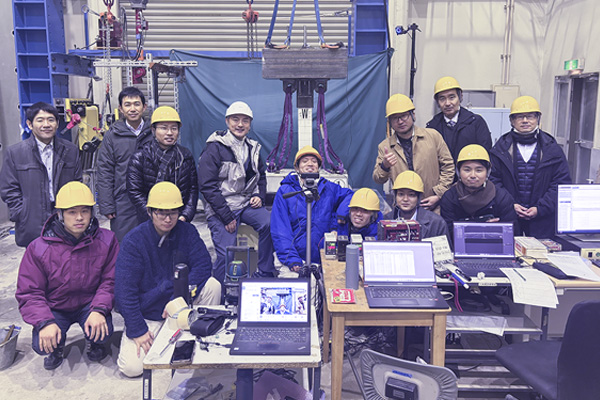
Urakawa (Oriental Shiraishi): I will never forget observing the dynamic shaking of the test pieces mimicking a bridge pier during a laboratory experiment conducted by Professor Fujikura at the university. The model bridge pier made of traditional steel reinforced concrete broke into pieces during the violent shaking, but the model incorporating our super elastic alloy did not fracture even under the heaviest shaking. Moreover, it fully returned to its original position when the shaking stopped. Upon seeing this miraculous sight, all of the engineers in attendance became excited and started to clap and cheer. I remember this moment so clearly that it still gives me goosebumps just thinking about it today.
While I was still studying in university, I was deeply shocked by the terrible images of the Great Hanshin-Awaji Earthquake on TV, and it led me to enter my current field with a desire to create earthquake resistant infrastructure in the future. I am certain that if "self-return technology" that enables a structure return to its original form even in an earthquake becomes more widely used within society, it will help limit urban damage and economic loss following a major earthquake. The progress of the project up until now has been more fun than I could have ever anticipated, but I am even more excited to imagine a future in which this technology is actually used in society.
Fujikura (Utsunomiya University): I work in an academic setting within a university, so I want my students who will be the future generation to experience the "body shaking excitement" I feel every day through this project.
If use of this new super elastic alloy becomes more widespread, it will definitely change the conventional wisdom within the civil engineering and architecture fields around the world. I greatly look forward to the day this excellent, unique technology originating from earthquake prone Japan becomes commonly used in expressways and important bridge pier infrastructure both in Japan and around the world in the future, and I intend to work to make this happen.
Kise (Furukawa Techno Material): The JST A-STEP Project itself as a national project successfully ended in March of this year. We are currently organizing the research results into a paper and plan to publicly announce the results in the near future. However, our challenge will not end there. Currently, more new external members and companies have been added to the team, and we have already started working to spiral up from the laboratory to the next stage of actual implementation in society.
In the past, the metal and material fields were often called "Japanese specialties" and were world leaders. With this revolutionary, first in the world new material developed in Japan, we have the chance here to produce results that will surprise the world. Also, this disaster prevention technology was developed in earthquake-prone Japan, and it will help protect the lives and livelihoods of people around the world. As someone who has dedicated his life to monozukuri, I feel that being a part of its development is the "greatest reward possible for an engineer".
Through the current experience, I truly feel that industry-academia collaboration and open collaboration including different fields will be absolutely essential to realize innovation in the coming era. Continuing closed development totally in-house will inevitably limit the range of ideas. I believe the most important thing is to break free from the confines of the organization and assemble a group of highly motivated people.
Araki (Kyoto University): This Cu-Al-Mn alloy has a very interesting backstory. It was originally discovered from an "accidental mistake" committed by a student during an experiment at Tohoku University. Starting from that point, we have had to overcome numerous funding and technological challenges to reach where we are today. We constantly had to walk a tightrope in which any one misstep could have led to the research being cut short.
We are currently using the know-how accumulated from copper-based alloys to simultaneously develop a less expensive general use "iron (Fe) based super elastic alloy". If we succeed in this development, it should have an even huger impact on society. Unlike copper, iron possesses the extremely excellent strength in that its characteristics as a material remain stable even under dramatic changes in ambient temperature. For this reason, along with increasing the earthquake resistance of land-based structures, we are looking toward realizing a recycling-based architecture system in which structures are "easy to build and easy to recycle following demolition in the future", as well as the suitability for space-based structures in the extreme vacuum environment of outer space. The ability to successively identify new possibilities by mutually bringing out and providing our knowledge is part of this team's excellence.
Omori (Tohoku University): Looking back, our team contains top class professionals in each field, and I feel it is a truly strong lineup. Dr. Kise of Furukawa Techno Material solved challenging problems that redefined conventional wisdom in metallurgy and actually created a single crystal super elastic alloy rod measuring 70cm in length. Professor Araki, with his unparalleled ideas and network, showed the overwhelming suitability for the architecture field. Professor Fujikura drove the civil engineering world through dynamic action not restrained by the Specifications for Highway Bridges, and Dr. Urakawa of Oriental Shiraishi quickly challenged the aggressive joint research without fear of the risks. The assembly of this team is the reason we have reached where we are today.
Working together with a private company on the basic research conducted at the university level brings a clear picture of the real issues for actual implementation in society and where the pressing needs are. The on-site issues obtained from such collaboration are then fed back into the basic research at the university and used to deepen the theory. Then, the evolved new technology is again provided to the production workplace of the private company (industry). Advancing forward by repeating this cycle is the spirit espoused by the "practical learning" traditionally valued by Tohoku University.
Within the daily joint research, a huge volume of test results and data exceeding our initial expectations is generated. However, with the current members, we can mutually provide insights, work together to solve the issues and further advance the technology. In 2011, I was in Sendai when the Great East Japan Earthquake occurred, and I experienced first-hand how improving earthquake resistance and seismic isolation in buildings, which are directly involved in protecting people's lives, is an extremely pressing social issue. For this reason, I strongly want this research to lead to actual implementation in society and not end simply with the publishing of a paper. I firmly believe we can definitely achieve this with the current outstanding members.
It necessarily takes a long time for completely new technology to become widely used in society. With this technology, too, a normal company may have suspended development when difficulties were encountered due to it not being profitable. However, Furukawa Techno Material persistently continued development without giving up in order to benefit future society, and as a result, following commercialization as ingrown toenail correction strips and load-bearing walls for houses, we have arrived at the point where we are looking toward "large-scale applications in the civil engineering field". When pursuing innovation, the most important factor is maintaining faith and relentlessly continuing without giving up regardless of how high the hurdles are.
Related Links
- Received the 66th Japan Institute of Metals and Materials Industrial Achievement Award (New release dated March 11, 2025)
- Furukawa Techno Material industry-academia-government collaboration research

- Received the 2023 Commendation for Science and Technology by the Minister of Education, Culture, Sports, Science and Technology (Tohoku University website)
- Received the Sankei Shimbun Award for the "32nd Advanced Technology Award for Creating Originality" (Tohoku University website)
- Improving earthquake resistance with a single crystal (Tohoku University website)
- Oriental Shiraishi Corporation Official Website
 Share
Share Tweet
Tweet Share
Share