
How Furukawa Electric’s Functional Plastics Help Build Data Centers Faster – and smarter

Following the increased use of generative AI and DX, the demand for data centers is rapidly growing. Furukawa Electric’s functional plastic products are being used in data center construction worksites around Japan and overseas. We spoke with key members of a cross functional working group that is moving quickly to capture rising market demand—and to turn what they learn on site into practical solutions.
We asked these members about the activities of the team, reactions and expectations from the market and future actions to be taken.
* Eflex, Green Trough, Smart Cellular Board and SCB are registered trademarks of Furukawa Electric Co., Ltd. in Japan.
-
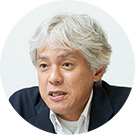
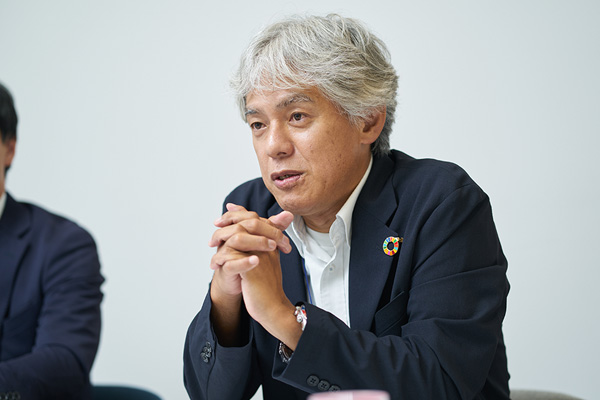
- Kozo Imai
- AT & Functional Plastics Division General Manager, Functional Plastics Engineering & Sales Department
1995 Joined Furukawa Electric
Responsible for leading the overall functional plastics business in the division.
-
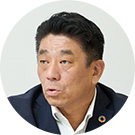
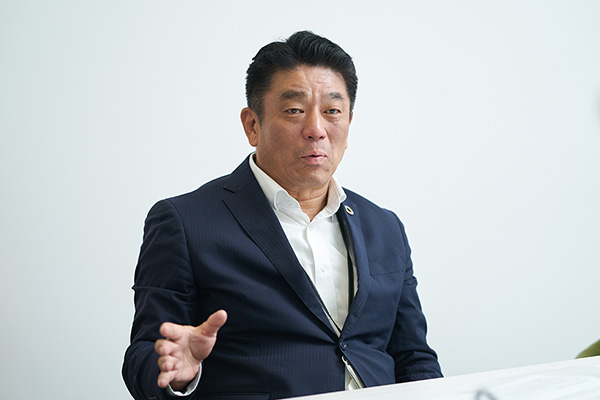
- Yasukazu Okamura
- AT & Functional Plastics Division Team Leader, Renewable Energy Promotion Project Team
2007 Joined Furukawa Electric
Responsible for marketing and sales of functional plastic products for the renewable energy market.
-
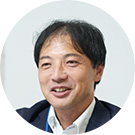
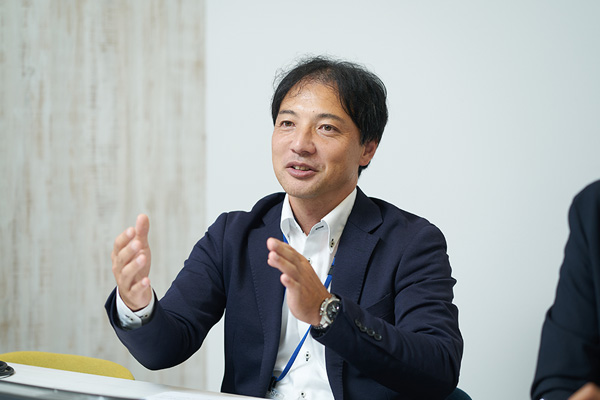
- Hiroshi Shiota
- AT & Functional Plastic Division General Manager, Functional Plastics Engineering & Development Department
2001 Joined Furukawa Electric
Responsible for promoting development of new functional plastic products and leading the working group for the data center market.
-
- Toshiya Toyoda
- AT & Functional Plastics Division Section Leader, Sales Section 3, Functional Plastics Engineering & Sales Department
2006 Joined Furukawa
Leads the marketing and sales of foam products, and promotes sales activities for the new Smart Cellular Board® for base stations.
“Go and see” is in our DNA – an on-the-ground habit that shapes every solution
——Please provide an overview of the data center market.
Imai : Recently, following the increased use of generative AI and DX, data volumes are exploding, and this has led to rapidly growing data center demand. In Japan, too, there have been a number of announcements concerning the construction of new data centers. We’re seeing that growth firsthand—project by project—and it’s accelerating. On the other hand, I receive information monthly about the rapid growth of other division’s data center products, and this growth has been surprising. As a result, we in the Functional Plastics Division quickly shifted from “how can we contribute?” to “where can we make the biggest impact—and how fast can we deliver it?”
Basically, our division is centered mainly in the Japan market, and we have faced the issue of labor shortages due to the shrinking workforce. Given this, we quickly grasped the needs for installation with fewer people, more simply, more definitely and faster, and we have focused on creating products that streamline the worksite installation operations. During development, the developers directly visit construction worksites and observe the flow of workers and goods. By developing lightweight products that can be carried by a single person and connected easily, we have not only enabled streamlined operations, but we have ultimately generated new value through the ability to greatly reduce construction times.
In the construction of data centers, great importance is placed on the speed from planning to startup. Large lots are required for construction, leading to issues including acquiring the surrounding land and responding to the foundation and disaster-related risks for ensuring stable operations. Large investments are required to overcome these issues. Given the scale of investment required, shortening the time from investment to start up is essential to achieving an earlier return. This leads to a strong desire to shorten the construction time. The value offered by our products that shorten construction times and reduce manpower meet these needs, and our products are increasingly being adopted. Based on this success, we have shifted further toward the data center market. In addition, a working group led by Shiota was established, and the focus as a division was steered in this direction.
——What is the reason that led to the idea of “providing in total” rather than continuing to deliver individual products?
Imai : At first, our involvement was project-specific—Eflex® in one project, Green Trough® in another. But when we stepped back and looked at the overall results, we realized our products were being adopted at far more sites than we had expected. That insight led us to move beyond supplying individual products and engage more deeply with customers as a total solution.
After a while, upon summarizing the results achieved by our products, it was learned that our products were being adopted in more worksites than expected. In addition, we felt there were still domains in which we could contribute, and as a group of engineering and sales members, we visited several data center worksites. During those visits, we noticed there were still many issues we can solve. Following this, rather than providing individual products, we decided to become more deeply involved in the worksites. After holding direct hearings with customers on the issues, a movement was formed toward developing products that can solve those issues.
——What were your thoughts upon actually visiting a worksite?
Shiota : Of course, with consideration for feasibility, we first visited a construction worksite and observed the movements of the people actually involved in construction, as well as how the goods were being handled. Following this, we approached these issues from the perspective of improving the existing product lineup and also from the perspective of forgetting the existing products and holding hearings with customers based on a completely new perspective. To date, we’ve visited around 40 sites—and we’re on track to reach 100 by the end of December. In some ways, even if it is not always easy, we are holding hearings and making an effort to visit worksites.
Imai : First, we will visit 100 worksites and gather information, and thereafter, we will make a real decision on what we can do. The attitude of visiting worksites may have become part of our division’s DNA.
Okamura : Our style is, “If we don’t know, go to the worksite”. At the foundation of this is the concept of “Actual place, actual part”. We hold direct hearings on the difficulties faced by the people in the worksite and develop products to solve those issues. We maintain and follow-through with this attitude.
Toyoda: Also, when visiting a worksite, it is not enough to simply go and come back. We bring samples backed by a certain rationale, ask “What do you think of this” and obtain feedback. This process is then repeated. The most important thing is to find what’s not working for our customers—the frustrations, the inefficiencies, the gaps—and turn those insights into products that solve real problems. We are currently making thorough efforts to carry this out.
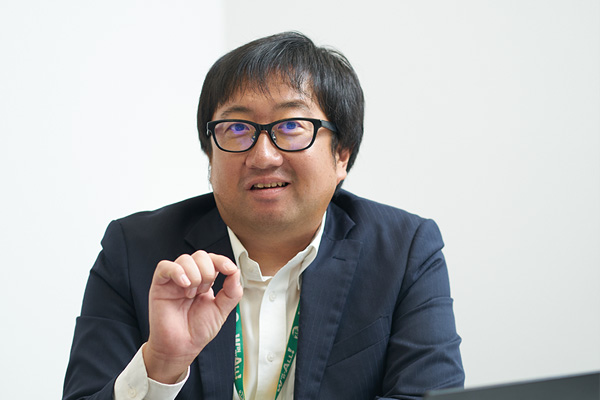
Imai:If we wait at our desks, we won’t hear the real problems. That’s why we go—see, touch, and learn on site. Along with listening, it is also important to actually “see” and “touch” the things we can experience in person. By doing this, it is possible to understand where the customer is feeling “dissatisfaction, inconvenience, deficiency”.
Factories continue to produce the same products in the same place with the same equipment, but construction worksites are constantly moving on to the next area once the current process is finished. Therefore, it is not always a perfectly rational environment. Given this, there are many dissatisfactions and issues hiding in the worksite. Looking at the worksite with a desire to alleviate the issues and make the work easier brings a lot of issues into view.
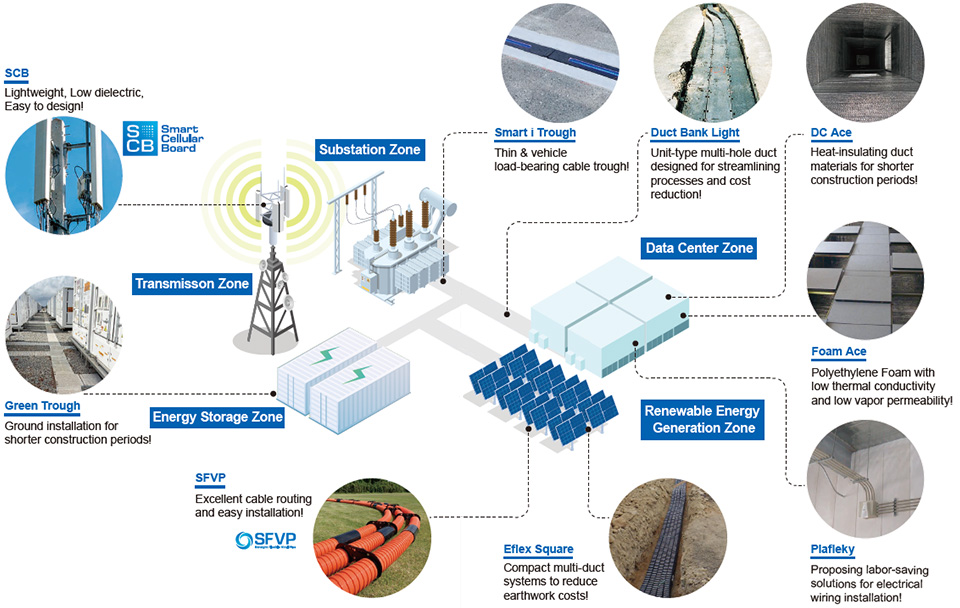
Okamura : The product called Green Trough® was created from an issue faced in the worksite. It is a cable trough made from recycled material. Feedback from the worksite has been incorporated since it first went on sale, and successive improvements have been made. For example, the one-touch attachment function was incorporated from feedback that “it would be more convenient if we could do this”. In this way, the product has continued to evolve, and we have been able to increase sales volumes following each improvement.
Proposing the optimum form for the customer from the standpoint of engineering
——Based on the various situations, how did you determine what issues are occurring and what needs exist during the construction of data centers?
Shiota : In the past, there were strong needs in general construction projects to “build it inexpensively”, but for data center construction projects, we learned there are strong needs to “quickly complete construction” with the aim of quickly starting operations. In other words, there are needs for products with improved installation features that can reduce construction times. Also, data centers are often expanded, so there also must be “expandability” for handling more cables. In addition to these requirements, it is also important for the products to be “environmentally friendly” with reduced environmental burden and easily “transportable” both in transit and within the worksite. We determined that the needs demanded for data center construction matched the value provided by our functional plastic product lineup.
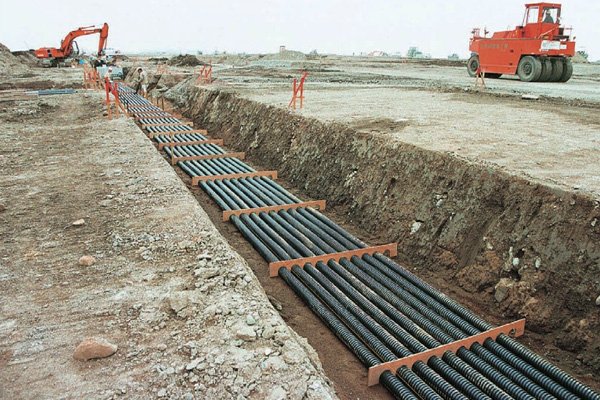
For example, our Duct Bank Light possesses features including “easy installation”, “environmentally friendly” and “expandability”. Traditionally, cables were mainly protected using concrete, but using a protective structure made with plastic blocks instead of concrete, it became possible for a single person to carry and assemble the structure. As a result, installation could be completed in 80% less time, and this rapid installation has been highly regarded by customers.
Also, waste cable jackets and recycled household containers are used for the raw materials of the plastic blocks, making the product environmentally friendly. Currently, we are considering the use of plastic waste generated from data center workplaces.
Imai : Green Trough® is also receiving similar attention. It has been adopted in Australia at a BESS (battery energy storage system) located next to a data center. If power to a data center is disrupted, it will cause massive damage, so it is common to establish a BESS area equipped with many back-up batteries next to data centers. These areas are made up of multiple containers, and Green Trough® was used over a wide area to connect these containers.
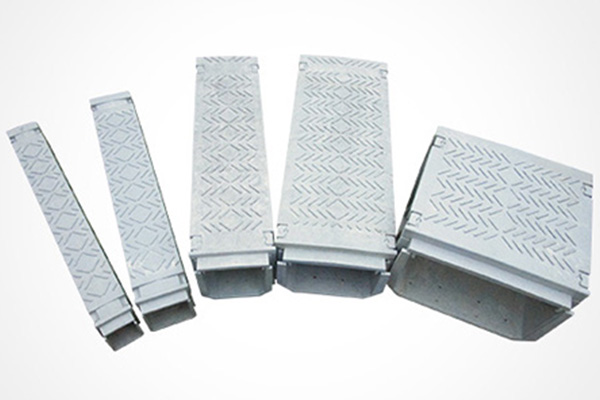
One of the merits of Green Trough® is that it is not necessary to dig deeply in the ground. Digging into the ground is difficult, and our product can greatly reduce the amount of digging required, thereby shortening the construction time. Another major merit is its great expandability. Data centers are often expanded later, and with Green Trough®, more cables can be easily added simply by opening the lid. Compared to buried troughs, it is possible to flexibly respond to future changes.
——You can make these proposals because you have the perspective of the installers backed by extensive installation experience.
Imai : That is correct. We strive to propose the optimum form for the customer through engineering proposals such as “using this product here will make the work easier” and “this is the best method for that location over there”.
Shiota : From the standpoint of installation efficiency, the data center in Australia mentioned earlier is a good example. For this project, about 6,000 meters of our trough were exported from Japan to Australia, and I believe it responded to the local needs. Specifically, trough installation that was expected to take 2 months with the traditional method was completed in just 1 month using our products. The customer was extremely happy.
Okamura : The traditional method involves digging into the ground and installing buried troughs or using heavy concrete troughs. In particular, because concrete troughs are heavy, they take time and effort to transport and install. However, our product is lightweight enough to be carried by a single person, making it possible for a worker to carry and install the trough by hand.
Shiota : However, new customer needs have arisen. The Green Trough® we currently provide is the largest size in the series, but we have received feedback that it is still too small to house multiple high voltage cables. Given this, we are now working to develop a larger product.
Several issues arise as the size increases. For example, one issue is transportation. The current product is made up of a lid and trough unit, but when the size is increased while maintaining the same structure, the internal volume, or in other words the amount of air being carried, increases. This leads to unnecessary transportation costs, so there needs to be innovations for increasing transportation loading efficiency.
In response, we are considering for example, assembly at the worksite. It would be similar to building a wall by assembling the parts like toy blocks, but it is of course also necessary to ensure strength as a product at the same time.
While maintaining structural strength, it should be storable in compact form during transportation and easily assembled at the worksite. We are currently working to develop a product with these features.
Keeping pace with a fast‑moving market—through teamwork and rapid development
——Why has Furukawa Electric been able to respond to these expectations? What do you view to be your strengths?
Okamura : I believe one of the strengths of this team is our ability to work together towards achieving the same target. For example, the Planning Department is also part of the team, and once the policy of “promoting the data center business” was decided, all of the members eagerly took action beyond the boundaries between departments. Current news concerning data centers is shared by the Planning Department to all team members almost weekly. This information is extremely high quality and contains information we did not already know. Thanks to this information sharing, we are able to have common topics within the group, and conversations flow naturally, such as “Did you see the information about that data center project?” I feel that the information sharing from the Planning Department has strengthened the cohesion within the entire team.
Imai : Our organization is lucky to possess long-selling products first launched in 1967, and there has been a residual culture of “continuation of the status quo”. Regardless of this, the business remained viable. In relation to the Shared Value part of “7S*”, the culture of “continuation of the status quo” was strongly rooted. However, in recent years, the business environment changed before our eyes, and we faced the need to transform ourselves in order not to be left behind by the changes in the external environment. Given this, we set forth a policy of “taking on new challenges, not continuation of the status quo”. As the first step, we began with transforming the awareness of staff members. We continued to convey acknowledgement of and praise the staff members who took on new challenges.
* 7S: Framework for organizational analysis espoused by McKinsey & Company. It refers to the 7 elements of Strategy, Structure, System, Staff, Skill, Shared Value and Style.
Over the course of several years, this culture gradually took root, and the number of followers who agreed with the new policy increased. The members here took the lead in challenging new domains and driving the culture of setting the next target, and I feel the overall organization is now riding this wave. The organizational culture has greatly changed.
Our flagship product Eflex® has continued to maintain the top share in Japan for over 50 years. With such a stable position for so long of a time, it is not surprising that an atmosphere of “why do we need to strive to achieve more” would arise. With the current transformation, we have changed from being content with long-term stability to an organization that continues to take on new challenges.
——What do you believe are your technological strengths that enable you to accurately grasp the issues faced by the customer and make optimum proposals?
Shiota : I believe one is the fact that people who deeply understand the technology actually take the time to visit the worksite. In addition, the technology we have accumulated over the years also makes a large contribution. Without simply manufacturing the same product for over 50 years, we have accumulated various technology along the way. Specific examples include plastic composition and forming technology, as well as foaming technology.
Also, as mentioned earlier in regards to Green Trough®, the recycling technology for recycling waste plastic is one of our strengths. We began conducting research and development 20 years ago into the effective use of recycled materials, and I believe the technology accumulated along the way can be utilized for data center products. Of course, it is not enough simply to operate the data center facilities. Rather, it has become clear that the facilities use a significant amount of electricity and must be sustainable in terms of electricity use. It will be important to indicate to what extent recycled waste is used and that the products themselves can be recycled. I believe our ability to provide sustainable products will be key to pleasing our customers. By making proposals that incorporate these innovations, I feel our products will be more readily selected by customers.
Imai : Transforming awareness is also important. When developing technology, too, speed is definitely important, so we have designated indicators such as “new product component sales ratio”. These indicators are publicized and shared within the division every month, and they enable everybody to clearly see if we are making steady progress in the plan or if we are falling behind. In other words, the status of how fast members are developing new products and if development is progressing as planned or has fallen behind are made visible in the light of day. As a result, member awareness has changed, and they are engaging in operations faster than before. In particular, speed is extremely important in the rapidly changing data center market. Regardless of the technological capabilities, if too much time is spent on development, we will be left behind by the market.
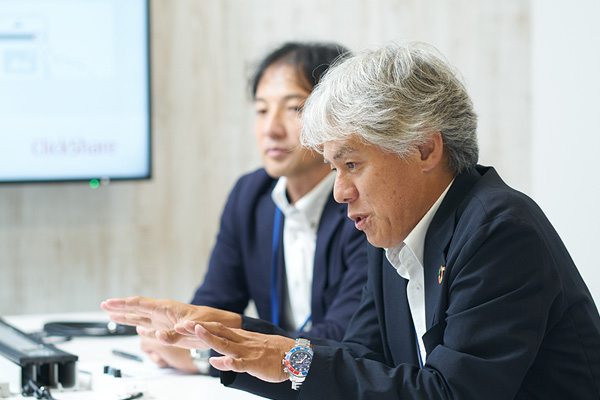
Toyoda : Our ability to quickly give form to new developments is a strength. Even if we possess numerous excellent technologies, our products will not be adopted by the customer if we propose their delivery 3 years in the future. When the customer has a request, we quickly build a prototype, bring it to the site, and propose a practical way forward—so we can learn together and iterate fast. The development cycle is extremely fast. Therefore, various improvements and new challenges are successively arising.
Also, we have an internal culture that encourages people to take on new challenges, with a mindset of “just give it a try.” Many of our younger employees share this feeling. On the other hand, some veteran employees may feel slightly uneasy about how fast change is occurring. Right now, we are actively assigning people who can adapt to these new ways of working and respond quickly to change.
Imai : I believe we can quickly turn new ideas into reality because we consistently hold discussions based on actual, tangible items. When we visit a customer, we do not only bring a catalog. Instead, we always bring some actual object.
Toyoda : For example, even if it is a plastic slab for which the customer might think, “Why did you bring a white block?”, we always show something real to the customer. In particular, overseas customers are extremely surprised when we show them such objects, but capturing the customer's interest through such items will lead to more definite discussions. Also, we strive to formulate hypotheses that will resonate with the customer and repeatedly verify if the hypothesis is correct.
Without being satisfied with the current situation, striving to always provide new value
——What are your plans for the future?
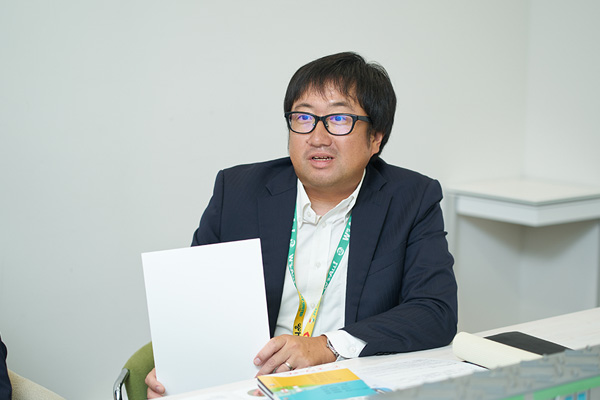
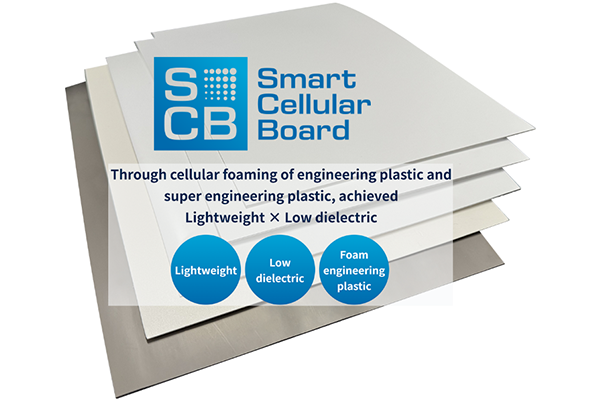
Toyoda : In the data center market, we are currently conducting interviews with customers and striving to create a new future based on the information obtained from those hearings. In particular, we are currently focusing on Smart Cellular Board® (SCB®), which is a product for telecommunications base stations, and working to expand it globally.
Our unique micro-foaming technology is unlike any technology found anywhere in the world. Following repeated failures, our efforts are finally starting to pay off.
In the past, we focused mainly on the construction market in Japan, but I believe this product has the potential to radically change the market. Given this, we concentrated young employees in this project, and we have established an engineering project team. Over the next 5 to 10 years, we will expand the business based on SCB®, identify new issues and further expand our development efforts.
Imai : This foam product was originally used as a reflective board in LCD televisions. In the past, when televisions shifted from CRT to LCD, it was adopted as the reflective board in the back. However, as you know, the product cycle in the television market is extremely short, and demand disappears quickly. This happened despite the fact that we were the only company in the world with this technology. However, today, we are attempting to bring it back to life by shifting from the original value as a reflective board to new value as a low dielectric material. This new value will create new markets.
——In other words, you were able to connect the company’s existing worldclass technology to new proposals during the hearings with customers?
Toyoda : Yes. We originally thought only about it as technology for reflecting light, but the new keyword “low dielectric loss” was received from the customer. As we continued with the hearings, we noticed that the low dielectric loss characteristic would be a major strength. This product is used at telecommunications base stations, and we wondered why there would be requirements for lighter weight. However, we learned that base station equipment is installed atop steel towers and installation involves extremely dangerous work. A lighter weight product makes it possible to shorten the time required for installation. Upon discovering this new application, the market started to greatly expand.
While possessing a strong technology foundation, I believe that going forward it will be increasingly important to identify different values in this technology and act to provide the optimum proposal from among the options available for the customer. Also, in order to respond to overseas customers, further increasing speed is an issue, and while striving to hold our own, I want to draw a vision for the future.
Imai : In the new markets we had yet to enter, we did not know who the key persons were. However, since COVID-19, as a result of enhancing our digital contents including the homepage and videos, the number of inquiries received through these channels has increased. Customers are taking the initiative to access us. In this way, we are able to connect directly with the key persons. Rather than us searching for them, they are finding us. Customers are faced with pressing issues, and I believe they are searching for solutions.
Toyoda : In our traditional distribution channels, it was not possible to connect directly with these customers. By including “low dielectric” as a keyword on our homepage, we are making it easier for customers to find us when conducting Internet searches.
Imai : We have established a dedicated working group for this purpose. The “DX Working” team includes consultants and is exploring daily how to increase our search engine hits. One of the results of these activities is “SCB®”.
Shiota : I would like to talk about our future plans from the perspective of the developer. Some of what I have to say may be a repeat of what has already been said, but we still have room for growth in the data center market. Currently, we are providing value through construction related products such as cable troughs and foam materials, but there are still other issues affecting data centers such as heat generation, insufficient power supply and lack of water for cooling. We have received inquiries from customers about these issues, and I want to use our accumulated technology in plastic forming and handling plastic materials to take on the challenge of developing non-linear new products; in other words, breakthrough products that are not simply extensions of existing lines
When developing non-linear new products, it will be essential to borrow the strength of external experts and specialists. Also, I believe that in some cases, we may partner with other companies possessing excellent technology and companies that perform actual construction work such as major construction companies. I believe we should first identify what we can do alone or if we have to partner with another company and then proceed with development while making agile decisions.
Okamura : Following the dramatic growth of data center demand in the future, we foresee major growth for our products such as Eflex®.
As part of our sales activities, we always remain attentive to what the customer has to say. Today’s discussion has focused on the products themselves, but the value we provide is not just those products. For example, we think about matters such as how to realize logistics that will please the customer and how to make ordering easier. We have received feedback from the customer that it would be interesting if there was a way to order easily with a smartphone, and we are considering this right now. Within the rapidly growing data center market, in addition to the products, I want to pursue increased customer satisfaction from a variety of angles including logistics and service.
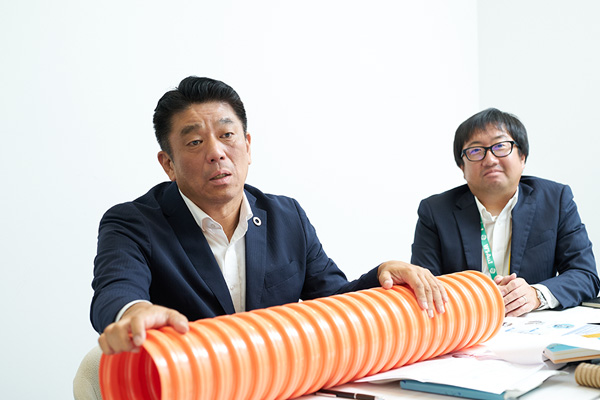
Imai : Without a doubt, the data center market will continue to grow. The facilities will become more advanced and increase in number. Within this trend, the current issues are already clear. For example, there is the issue of tight power supply. There is also the issue of how to handle the massive amount of heat generated from these facilities. Moreover, in the case of water-cooled systems, there are the issues of where the water will be obtained and how it will be recycled. These issues will become more severe, and they stand before us as real problems. We will strive to overcome these issues, and I believe there are still many product domains in which we can provide value. Therefore, while maintaining our style of “Go to the worksite, listen to the customer, create products based on that feedback and show actual objects to the customer”, without being satisfied by the current situation, I want to continue our effort to always provide new value.

 Share
Share Tweet
Tweet Share
Share